
Popular in Houston
Colonoscopy vs Endoscopy
Learn the difference between colonoscopy and endoscopy, when each is needed, and how to prepare for these procedures.

Understanding the difference between colonoscopy and endoscopy helps patients make informed decisions about their digestive health. Both procedures are used to examine the digestive tract, but they serve different purposes and focus on different areas.
Advanced Digestive Care. Compassionate Expertise. Lasting Relief.
Learn How a Colonoscopy WorksWhat Is a Colonoscopy
A colonoscopy is a procedure used to examine the large intestine (colon) and rectum. It is commonly used for:
Colon cancer screening
Detecting polyps
Investigating bleeding or changes in bowel habits
Learn more about colonoscopy in Houston.
What Is an Endoscopy
An endoscopy is used to examine the upper digestive tract, including the esophagus, stomach, and small intestine.
It helps diagnose:
Acid reflux and GERD
Ulcers
Swallowing difficulties
Upper abdominal pain
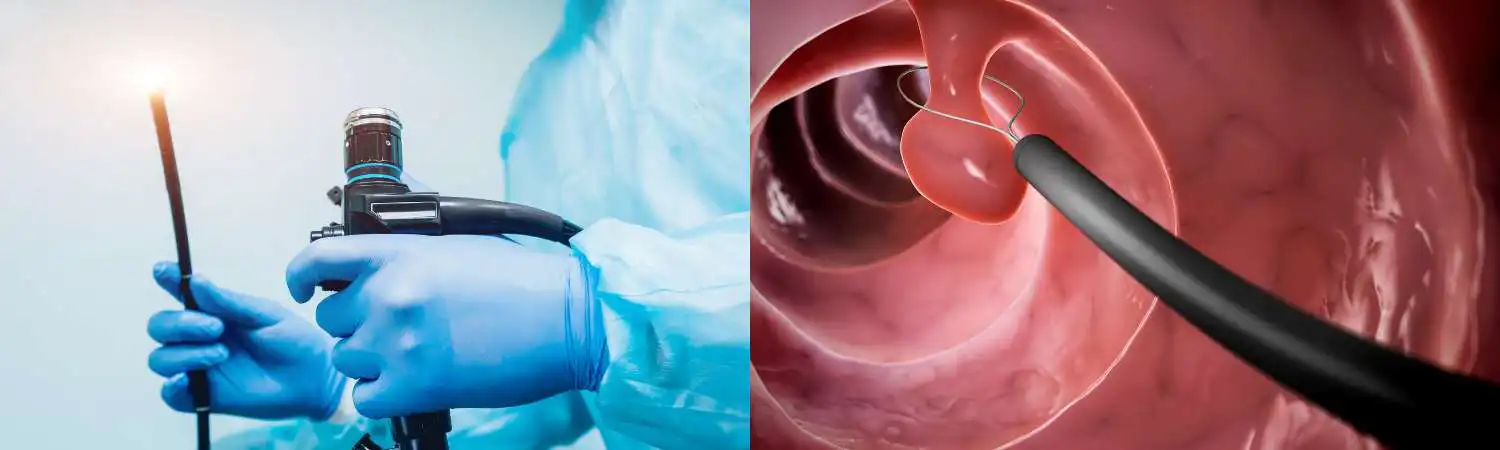 Compare the Two Procedures
Key Differences Between Colonoscopy and Endoscopy
Colonoscopy examines the lower digestive tract
Endoscopy examines the upper digestive tract
Preparation differs for each procedure
Both are minimally invasive and performed with sedation
When You May Need Each Procedure
Your doctor may recommend one or both procedures based on your symptoms.
Colonoscopy for lower GI symptoms such as bleeding or bowel changes
Endoscopy for upper GI symptoms like heartburn or swallowing issues
Consulting a GI clinic in Houston helps determine the right approach.
Curative Digestive Disease and Cancer Center & Expert Provider Care
Curative Digestive Disease and Cancer Center is a leading gastroenterology and hepatology practice in Houston, dedicated to delivering advanced, patient-centered care for a wide range of digestive and liver conditions. Led by Dr. Ahmad Farooq and Dr. Marc Catalano, board-certified gastroenterologist and hepatologist with elite training from institutions such as Yale School of Medicine and Duke University, the center combines clinical expertise with cutting-edge research to provide accurate diagnosis and effective treatment.
Patients benefit from a comprehensive approach that includes in-house pathology services, an on-site endoscopy suite, and access to advanced diagnostic procedures such as colonoscopy, endoscopy, and endoscopic ultrasound. This integrated model allows for faster results, more precise treatment planning, and a seamless patient experience.
With a strong focus on personalized care, Curative Digestive Disease and Cancer Center treats conditions ranging from acid reflux and IBS to liver disease, pancreatitis, and colon cancer. The team is committed to compassionate care, timely access—including same-day appointments when needed—and long-term digestive health solutions designed to improve each patient’s quality of life.
Curative Digestive Disease Center – Your Trusted Partner in Digestive Health
Located in Houston, TX, Curative Digestive Disease Center is a trusted center for comprehensive digestive care. Our team specializes in diagnosing and treating a wide range of gastrointestinal conditions using advanced medical technology and evidence-based treatments. We are committed to delivering compassionate, patient-centered care focused on long-term digestive health and overall well-being.
Speak With a GI Specialist
Board-certified gastroenterologists in Houston. Same-day appointments available.
✆ (713) 393-7744 Book a GI EvaluationGI Symptoms
GI Conditions
FAQs About Colonoscopy vs Endoscopy
Is colonoscopy or endoscopy more painful?
Both procedures are typically performed under sedation, so discomfort is minimal.
Can both be done on the same day?
Yes, in some cases both procedures may be scheduled together.
What is the difference between a colonoscopy and an endoscopy?
A colonoscopy examines the colon and rectum from below and is used for colorectal cancer screening, polyp removal, bleeding, and bowel-habit changes. An upper endoscopy (EGD) examines the esophagus, stomach, and first part of the small intestine from above, and is used for reflux, ulcers, difficulty swallowing, and upper GI bleeding.
Can I have both procedures at the same visit?
Often yes. When symptoms point to both the upper and lower digestive tract, we can perform an EGD and a colonoscopy under a single session of sedation, which means one preparation, one recovery, and one day away from work.
Which one do I need?
That depends on your symptoms. Heartburn, swallowing trouble, or upper abdominal pain usually point to an EGD; rectal bleeding, bowel-habit changes, or screening at age 45 point to a colonoscopy. A consultation settles it before anything is scheduled.
Where are your Houston offices?
We see patients at 7919 Kirby Dr, Houston, TX 77054 and at 1213 Hermann Drive, Suite 360, Houston, TX 77004, with our own endoscopy suite on site.